

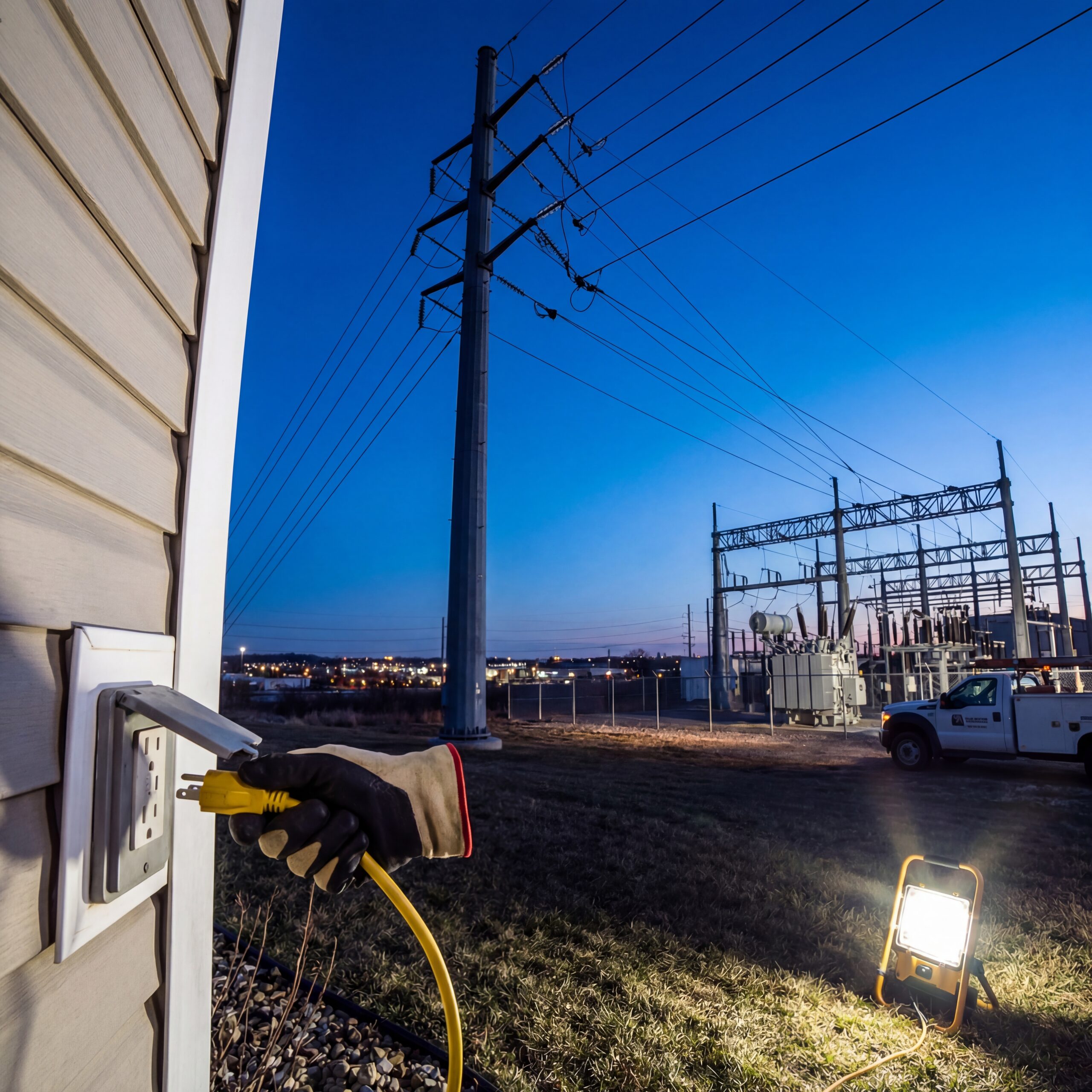
Getting Comfortable with the Flow of Electricity
Every successful electrical project, from a kitchen remodel to a manufacturing plant upgrade, depends on the same core principles of electricity. When contractors and technicians share a solid grasp of these fundamentals, design decisions become clearer and troubleshooting becomes faster. Voltage, current, resistance, circuits, and power distribution are not just theory; they drive conduit layout, panel selection, and protective device coordination. Whether you are roughing in a home or coordinating with an engineer on a large facility, these basics shape safety and performance. Treating them as daily tools, not classroom concepts, keeps projects on time and installations reliable.
Voltage, Current, and Resistance in Real-World Wiring
Voltage, current, and resistance show up on every plan set and label you touch, so it helps to think of them in field terms. Voltage is the electrical “pressure” that pushes current through a conductor, and it determines insulation ratings, device selection, and shock risk. Current is the actual flow of electrons, and it drives wire sizing, breaker selection, and equipment loading. Resistance is anything that opposes this flow, from conductor material and length to loose terminations and undersized connectors. When you understand how these three interact, code tables and spec sheets become practical tools instead of abstract numbers.
On the job, Ohm’s Law is less about math drills and more about quick, informed decisions. A voltage drop issue on a long feeder, nuisance tripping on a heavily loaded circuit, or a hot connection in a panel all trace back to this triangle of voltage, current, and resistance. When you evaluate a problem, it helps to ask which one is out of balance. From there, you can adjust designs or repairs in targeted ways.
- Check voltage ratings against the system to avoid premature equipment failure or insulation breakdown.
- Verify current-carrying capacity of conductors and breakers to prevent overheating and fire risk.
- Reduce unwanted resistance by tightening terminations, using proper connectors, and choosing correct conductor sizes and materials.
From Single-Phase Panels to Three-Phase Systems
Residential work is dominated by single-phase systems, typically with split-phase service feeding branch circuits for lighting, receptacles, and appliances. In this environment, contractors focus on balancing loads across the two legs, avoiding overloaded neutrals, and coordinating breakers for expected household usage. Voltage levels are lower, but careless work can still lead to shock, fires, or equipment damage. A solid grasp of single-phase behavior makes it easier to step confidently into more complex systems.
Commercial and industrial sites often run on three-phase power, which delivers energy more efficiently to large motors, HVAC systems, and process equipment. Three-phase service introduces additional considerations such as phase rotation, unbalanced loading across phases, and different voltage configurations from delta and wye systems. Incorrect connections can lead to motors running backward, excessive vibration, or uneven heating in loads. Contractors working in these environments must read nameplates carefully and verify phasing during installation and commissioning.
- Map out which panels and loads are single-phase versus three-phase before rough-in work begins.
- Use load calculations that respect phase balancing, not just total kVA or amperage.
- Confirm phase sequence with appropriate testers before energizing motors or rotating machinery.
Circuit Layouts, Loads, and Balancing
Every branch circuit is a path for current to travel from source, through loads, and safely back to the source. In practice, that means carefully choosing conductor sizes, overcurrent protection, and the number and type of devices on each run. Series and parallel concepts matter here, even if you mostly think in terms of splices and terminations. Branch circuits are largely parallel so each load gets full system voltage, and a fault on one device does not shut down the entire system. Understanding this helps you predict how adding or relocating loads will affect an existing installation.
Balancing is especially important when you are working in panels that serve mixed lighting, receptacle, and equipment circuits. An unbalanced neutral or heavy loading on a single phase can cause voltage fluctuations, dimming lights, or nuisance tripping on certain breakers. In large residential projects and most commercial installations, panel schedules are your roadmap to keep loads evenly spread. Treat them as living documents that reflect how the building will truly operate, not just a code minimum checklist.
- Group similar loads together while still distributing them evenly across phases or legs.
- Allow margin for future expansion instead of running circuits at the edge of capacity.
- Revisit panel schedules after field changes to ensure balance still holds before final inspection.
Grounding, Bonding, and Fault Paths
Safe fault current paths are at the heart of every reliable electrical installation, regardless of building type. Grounding connects systems and equipment to the earth, limiting voltage rise during faults and lightning events. Bonding ties metal parts together so they remain at the same electrical potential, reducing shock risk when a fault occurs. When grounding and bonding are done correctly, overcurrent devices can detect and clear faults quickly. When they are done poorly, metal enclosures and raceways can become energized while breakers remain closed.
Contractors see grounding and bonding on every job in the form of grounding electrode conductors, bonding jumpers, and equipment grounding conductors. The way you size, route, and terminate these conductors has a direct impact on both safety and performance. Loose lugs, corroded connections, or missing bonds often explain strange voltage readings and intermittent faults in older installations. Treat grounding and bonding work with the same precision you give to any feeder or branch circuit.
- Verify continuity of grounding and bonding paths before closing up walls or energizing a system.
- Use listed connectors and follow torque specifications for long-term reliability.
- Pay special attention to bonding around metallic piping, structural steel, and separately derived systems such as transformers.
Residential Power Distribution: Safe, Predictable Loads
In residential settings, power distribution centers on main service equipment, subpanels, and branch circuits serving well-understood loads. Most homes share similar demand patterns, with peak usage driven by cooking, laundry, climate control, and entertainment. This predictability lets contractors design systems that are both safe and cost-effective while still allowing for future upgrades like electric vehicle chargers or home offices. Clear labeling, thoughtful panel placement, and organized raceways help homeowners and future electricians work safely in the space. Good residential distribution feels almost invisible to occupants because everything simply works without drama.
Field decisions during residential work often involve routing, panel capacity, and device selection rather than complex coordination studies. Still, the fundamentals remain critical, especially with growing use of high-demand appliances, backup power systems, and smart devices. Voltage drop becomes more important on long driveway runs or detached structures, and arc-fault and ground-fault protection must be applied correctly. When you apply the same discipline here that you would on a larger job, callbacks and warranty issues drop significantly.
- Plan panel locations with serviceability in mind, not just the shortest feeder runs.
- Account for future high-demand loads so homeowners are not forced into expensive retrofits.
- Use clear circuit labeling that describes actual rooms and equipment, not vague numbers or codes.
Commercial and Industrial Power Distribution: Scaling Up Safely
Commercial and industrial projects scale up the same principles but add complexity through higher fault currents, more diverse loads, and extensive distribution networks. Here you may encounter main switchboards, distribution panels, transformers, motor control centers, and busway systems. Each step from the service entrance to the final load must be coordinated for available fault current, selective tripping, and operational needs. Layout choices affect not only safety but also maintenance access and future expansion. In these environments, clear coordination with engineers, owners, and maintenance teams is just as important as the wiring itself.
On industrial sites in particular, motors, drives, and process equipment dominate the load profile. Starting currents, harmonics, and motor protection settings all influence conductor sizing, breaker types, and grounding approaches. Contractors must think beyond simple amperage ratings and consider how the equipment will operate under different conditions. Reliable power distribution here means more than just keeping lights on; it protects productivity, critical processes, and sometimes even life safety systems. When you ground your decisions in solid fundamentals, you can ask better questions, catch design gaps early, and deliver systems that perform for decades.
- Review available fault current data before selecting or installing switchgear and distribution equipment.
- Coordinate with facility staff about shutdown procedures and maintenance access during design and construction.
- Document as-built routing and terminations so future upgrades and troubleshooting start from accurate information.